
Why Zero PPM Chlorine Water Matters for Car Detailing

A clean car can still look wrong after a wash if the water leaves behind streaks, spots, or a dull finish. Soap quality matters. Technique matters. But the water itself often decides how good the final result looks.
For car detailing, water with 0 PPM chlorine gives detailers more control. It helps soaps work the way they should, reduces chemical interference, and protects delicate finishes from unnecessary residue. This matters even more in sunny, coastal areas like Honolulu, Pearl City, North Shore, and nearby military communities, where heat and salt air already make vehicle care more demanding.
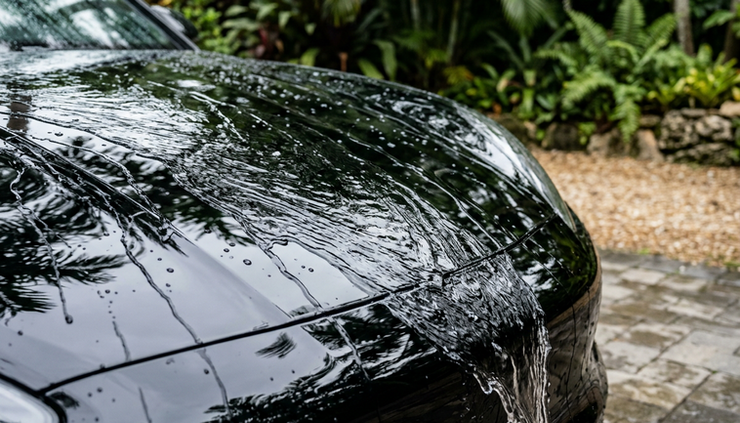
What 0 PPM chlorine means
PPM means “parts per million.” It is a simple way to measure how much of a substance is present in water. When water tests at 0 PPM chlorine, it means there is no measurable free chlorine in the water being used.
Many municipal water systems use chlorine or chloramine to help keep drinking water safe. That is useful for public water treatment, but it is not ideal for delicate detailing work.
Car paint, glass, rubber trim, chrome, vinyl, ceramic coatings, and waxes all react best when the wash process is predictable. Chlorine adds another variable. Even if the amount is small, it can affect how water behaves on the surface and how detailing chemicals perform.
Chlorine can interfere with detailing chemicals
Quality shampoos, rinseless washes, iron removers, clay lubricants, glass cleaners, and coating prep products are made to work within a certain chemical range. Chlorinated water can change that range.
The effect is not always dramatic, but it can show up as:
Soap that feels less slick than it should
Rinse water that dries unevenly
Glass that looks hazy after cleaning
Trim that seems to hold residue
Reduced performance from some final rinses or drying aids
In Auto Detailing, small improvements matter because the finish is judged under direct light. A hood may look fine in the shade, then show streaks as soon as the sun hits it. Removing chlorine from the water helps create a cleaner wash environment from the first rinse to the final towel pass.
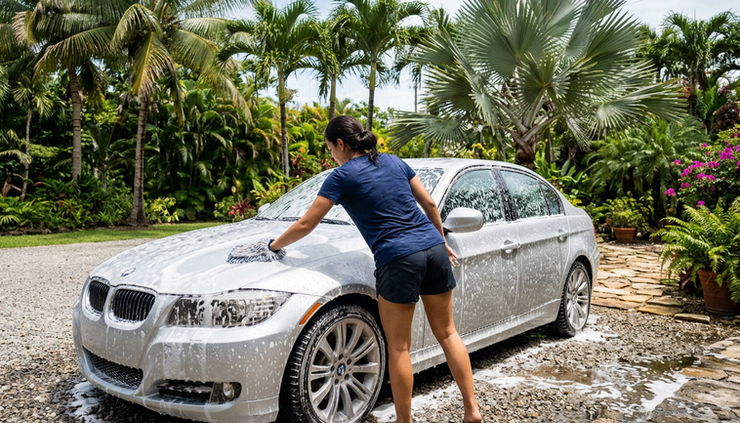
Zero chlorine helps protect waxes, sealants, and coatings
Paint protection works best when it bonds cleanly and cures without contamination. That applies to waxes, polymer sealants, spray ceramics, and true ceramic coatings.
Chlorine is an oxidizer. In plain terms, it is chemically active. While normal tap water will not instantly ruin a coating, repeated exposure during washes can work against the products used to protect the vehicle. Over time, that can contribute to faster wear, weaker water beading, and less gloss.
Using water with 0 PPM chlorine is especially helpful during:
Final rinsing before drying
Paint prep before applying protection
Maintenance washes on coated vehicles
Glass cleaning before applying a water repellent
Rinseless or waterless wash mixing
The goal is simple. Let the protection product do its job without extra chemical interference.
Chlorine is not the same as hard water
This part matters because many people mix up chlorine, minerals, and total dissolved solids.
Chlorine is used for disinfection. Hard water minerals, such as calcium and magnesium, are what usually create chalky Water Spots when water dries on paint or glass. A chlorine test and a TDS meter measure different things.
That means water can have:
Water condition | What it means for detailing |
0 PPM chlorine but high minerals | Better chemical stability, but still a spot risk |
Low minerals but measurable chlorine | Fewer mineral spots, but possible chemical interference |
0 PPM chlorine and low TDS | Best control for high-end washing and rinsing |
For the cleanest results, many detailers aim for both: 0 PPM chlorine and low dissolved minerals. Chlorine removal improves chemical behavior. Mineral removal improves drying and spot prevention.

Why it matters more in hot and coastal areas
Heat speeds up drying. Salt air adds more contamination to the paint. Strong sun makes streaks and residue easier to see. That combination is common across Oahu, from central areas near Schofield and Wheeler to coastal neighborhoods around Waialua and Honolulu.
When chlorinated water dries quickly on a warm panel, it leaves less time to rinse and towel-dry properly. Even if chlorine itself evaporates or breaks down, the wash process can still suffer because the water did not behave cleanly while it was on the surface.
This is why shaded washing, panel-by-panel rinsing, and purified water all work together. Zero chlorine water gives the detailer a better starting point before battling sun, wind, salt, and road film.
How detailers remove chlorine from water
There are several ways to reduce or remove chlorine before it touches the vehicle. The best choice depends on the setup and how often the water is used.
Common options include:
Activated carbon filtration
Carbon filters are widely used to reduce chlorine taste and odor in drinking water, and they can help with wash water too.
Catalytic carbon filtration
This can be more effective for chloramine, which some water systems use instead of free chlorine.
Reverse osmosis systems
RO systems reduce many dissolved substances and are often paired with carbon pre-filters.
Deionized water systems
DI tanks or cartridges remove charged dissolved minerals. They are often used for spot-free rinsing, though chlorine removal usually happens before the DI stage.
For serious detailing, testing is better than guessing. Chlorine test strips are simple and inexpensive. A reading of 0 PPM confirms the filter is doing its job.
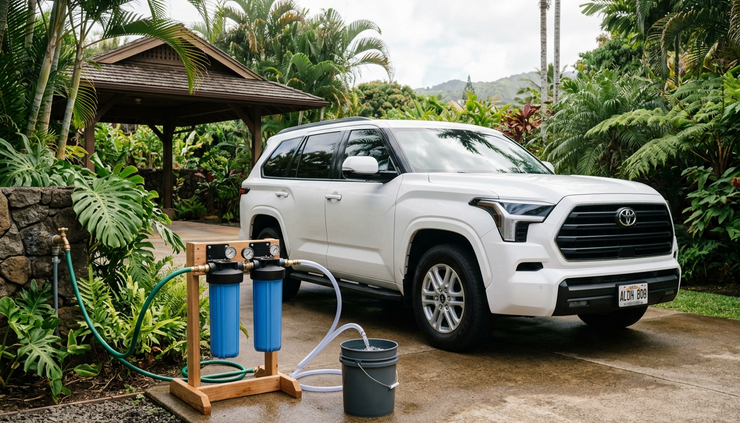
The final rinse is where 0 PPM chlorine pays off
The final rinse is the last thing that touches the paint before drying. If that water contains chlorine, minerals, or other dissolved material, it can affect the finish right before the job is complete.
Using zero chlorine water during this stage helps create:
Cleaner glass
Brighter paint
Less residue on trim
Better towel glide
More consistent gloss
A cleaner surface for spray waxes and sealants
It also reduces the chance of chasing streaks after drying. That saves time and lowers the risk of adding towel marks from repeated wiping.
The takeaway for better detailing results
Water quality is not a small detail. It is part of the detailing system.
For everyday washing, 0 PPM chlorine water helps soaps perform better and lowers the chance of chemical residue. For paint correction, coating prep, and maintenance washes, it gives a cleaner base for higher-quality results. When paired with low-mineral or deionized water, it becomes one of the simplest ways to improve gloss, clarity, and consistency.
If the goal is a finish that looks clean in full sun, start with the water. Zero PPM chlorine gives every product after it a better chance to work.



Comments