
What Is Auto Detailing and Why Does Your Car Need It

A car can look “clean” after a drive-through wash and still carry brake dust, road film, salt, bug residue, food crumbs, body oils, and fine grit in places a quick wash never reaches. That buildup does more than dull the finish. Over time, it can stain trim, age upholstery, cloud glass, and make paint harder to protect.
This case study follows a common detailing scenario: a daily-driven sedan that received its first full detail after years of basic washes. The numbers below come from the vehicle inspection used in this example, not from a universal industry average.

The background
The vehicle was a 6-year-old compact sedan used for commuting, errands, and weekend trips. It was not neglected. The owner washed it every few weeks and vacuumed it when the interior looked messy.
Still, the car had the usual signs of real-world use:
Dull paint with rough spots on the hood and roof
Brake dust baked into the front wheels
Light water spots on the glass
Coffee stains near the cup holders
Dust in vents, seams, and seat rails
A stale smell from fabric and floor mats
This is where Auto Detailing differs from a standard car wash. A wash removes loose dirt from visible areas. Detailing cleans, restores, and protects the vehicle in a more complete way, inside and out.
The problem was bigger than surface dirt
The initial inspection used simple scoring from 1 to 5, where 1 meant excellent condition and 5 meant heavy buildup or wear.
Area inspected | Before score | Main issue found |
Paint surface | 4 | Rough contamination and dullness |
Wheels | 4 | Brake dust in corners and barrels |
Glass | 3 | Water spots and interior haze |
Interior fabric | 3 | Stains and trapped odors |
Trim and seals | 3 | Dust, fading, and residue |
The biggest surprise was the paint. It looked acceptable from 10 feet away, but a clean hand in a plastic bag could feel bonded grit on the hood. That rough texture meant the paint was holding contamination that soap alone could not remove.
The interior had a similar issue. A quick vacuum had removed visible debris, but dust remained in seams, lower seat tracks, vents, and around controls. The car was clean enough to drive, but not truly clean.

The approach focused on cleaning first, then protection
The detailer chose a full interior and exterior detail, not paint correction. That mattered because the car had light swirls, but the main goal was to restore cleanliness and add protection rather than chase a show-car finish.
The exterior process
The exterior work followed a careful order:
Pre-rinse and foam wash
Loose grit was softened and removed before hand washing to reduce the chance of adding more swirl marks.
Wheel and tire cleaning
Dedicated cleaners and brushes reached the wheel faces, lug areas, barrels, and tire sidewalls.
Contact wash
A wash mitt and pH-balanced shampoo removed road film from painted panels, trim, mirrors, and door edges.
Paint decontamination
A clay treatment removed bonded particles from the paint and glass.
Light polish on selected areas
The hood and trunk received a mild polish to improve gloss where dullness was most visible.
Paint protection
A sealant was applied to help water bead and make future washing easier.
The interior process
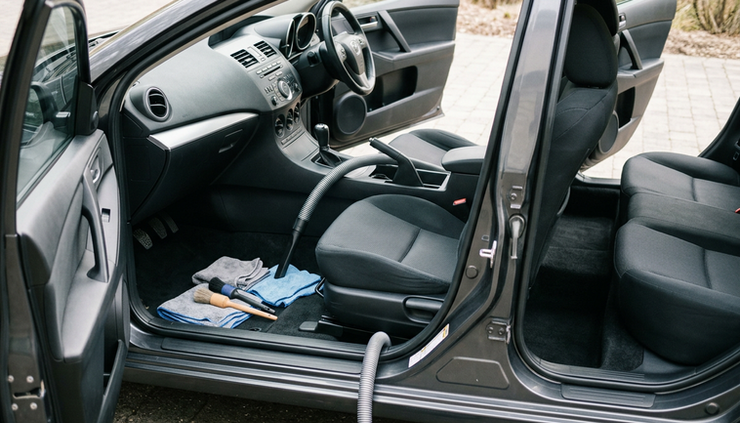
The interior work was just as detailed:
Floor mats were removed, scrubbed, rinsed, and dried.
Carpets and seats were vacuumed slowly with crevice tools.
Fabric stains were treated and extracted.
Plastic panels were cleaned with soft brushes and microfiber towels.
Vents, cup holders, seams, and switches were cleaned by hand.
Glass was cleaned inside and out to remove haze.
The goal was not to cover smells with fragrance. The goal was to remove the source of odor where possible.
The results were visible and measurable
After the detail, the same inspection scale was used.
Area inspected | Before score | After score | What changed |
Paint surface | 4 | 2 | Smoother feel and better gloss |
Wheels | 4 | 1 | Brake dust removed from tight areas |
Glass | 3 | 1 | Clearer view with less haze |
Interior fabric | 3 | 2 | Stains reduced and fresher smell |
Trim and seals | 3 | 2 | Cleaner edges and more even finish |
The detail took most of a working day. The largest gains came from areas that often get skipped during normal car care.
The paint did not become flawless. Some deeper scratches and swirl marks remained because full paint correction was not part of the service. Still, the car looked brighter, felt cleaner, and became easier to maintain.
The biggest value of detailing is not only the shine. It is the removal of buildup before it becomes harder to fix.
Why a car needs detailing
Detailing helps protect the parts of a vehicle people touch, see, and rely on every day.
It helps preserve paint
Road grime, bird droppings, bug residue, tree sap, and salt can cling to paint. If they sit too long, they may stain or weaken the surface. Detailing removes this buildup and adds a layer of protection.
It keeps the interior healthier and more pleasant
Seats, carpets, vents, and touchpoints collect dust, oils, crumbs, pollen, and spills. A detailed interior feels better to sit in and can reduce lingering odors.
It improves visibility
Clean glass matters. Interior haze and exterior water spots can make driving harder, especially at night or in low sun.
It supports resale value
A well-kept car gives a better first impression. Clean paint, fresh fabric, clear glass, and tidy trim suggest the vehicle has been cared for.

Lessons from the case study
This sedan did not need extreme restoration. It needed thorough cleaning, careful decontamination, and basic protection. That is true for many daily drivers.
Three lessons stand out:
A clean-looking car can still hold hidden contamination
Paint, glass, wheels, and interiors collect residue that routine washing misses.
Detailing works best before damage becomes severe
Removing buildup early is easier than correcting stains, etched spots, or deeply embedded dirt later.
The right service depends on the car’s condition
A maintenance detail, full detail, and paint correction are different services. The best choice starts with inspection.
Auto detailing gives a vehicle more than a fresh appearance. It restores cleanliness, protects surfaces, and makes daily driving feel better. For cars that work hard every week, that level of care is often the difference between looking washed and being truly clean.



Comments