
Wax vs Ceramic Coating How Long They Last and What They Do

A freshly washed car can look protected when it is not. Gloss is easy to see. Protection is harder to judge until water stops beading, bugs start sticking, or the paint feels rough again.
This case study follows two similar daily driven vehicles over 12 months. Both started with clean, decontaminated paint. One received a traditional wax. The other received a ceramic coating. The goal was simple: compare what each product is meant to do, how long each one lasts, and what kind of maintenance keeps the paint looking good.
The short answer is clear. Wax is a short-term sacrificial layer that adds gloss and water beading. Ceramic coating is a longer-lasting bonded layer that improves durability, chemical resistance, and ease of cleaning. Neither one makes paint invincible.

The case study setup
The comparison used two daily driven sedans in similar conditions. Both vehicles lived outdoors during work hours, spent nights in a garage, and saw normal road use, including rain, dust, pollen, bird droppings, bug splatter, and weekly short trips.
Before protection, both vehicles received the same prep:
Thorough hand wash
Iron remover
Clay treatment
Light machine polish
Isopropyl alcohol wipe-down
Paint inspection under LED lighting
The prep mattered because wax and ceramic coating both perform better on clean paint. Applying either product over oxidation, embedded grime, or old residue limits the result.
The vehicles were then split.
Vehicle | Protection used | Application time after prep | Main goal |
Sedan A | Carnauba-based wax | About 30 to 60 minutes | Warm gloss and short-term protection |
Sedan B | Consumer-grade ceramic coating | About 2 to 4 hours including cure checks | Longer protection and easier washing |
Both cars were washed every two weeks with pH-neutral car shampoo. No automatic brush washes were used. Neither car received extra spray wax or ceramic topper during the first six months, so the base product could be judged fairly.
What wax is meant to do
Wax sits on top of the paint. It does not permanently bond to the clear coat. It creates a thin sacrificial layer between the environment and the paint surface.
Traditional car wax often uses carnauba wax, synthetic wax ingredients, or a blend of both. It is popular because it is easy to apply, affordable, and gives paint a warm, rich shine.
Its main purposes are simple:
Add gloss and depth
Create water beading
Make light dirt easier to rinse off
Add a temporary barrier against bugs, sap, and bird droppings
Improve the feel of the paint after washing
Wax is often the right choice for owners who enjoy regular detailing. It rewards frequent care. The paint feels slick after application, water beads quickly, and the car looks freshly detailed with little time or equipment.
The tradeoff is durability. Wax wears away from washing, heat, sunlight, rain, road grime, and detergents. On a daily driver, most traditional waxes last 4 to 12 weeks. Some synthetic waxes and paint sealants can last closer to 3 to 6 months, but those are usually closer to sealants than old-school carnauba wax.
In this case study, Sedan A looked excellent during the first month. Water beaded tightly, dust rinsed off easily, and the paint had a deep gloss after each wash.
By week 8, performance started to fade. Beading became flatter on the hood and roof, which receive the most sun and weather. By week 12, the lower doors still had some slickness, but the horizontal panels needed another coat.
Wax protects best when it is treated as routine maintenance, not a one-time upgrade.
What ceramic coating is meant to do
Ceramic coating works differently. A true coating uses ingredients such as silicon dioxide, often called SiO2, or related ceramic chemistry. Once applied and cured, it bonds more firmly to the paint surface than wax.
That bond is the reason ceramic coating lasts longer. It forms a harder, more chemical-resistant layer than wax. It does not make the paint scratch-proof, but it can reduce how easily grime sticks and how quickly the finish loses slickness.
Its main purposes include:
Longer-lasting water behavior
Stronger resistance to detergents and road film
Better protection against UV exposure than wax
Easier bug and dirt removal
Longer gloss retention
Less frequent reapplication
Ceramic coating is not armor. Rock chips can still happen. Hard water spots can still etch if ignored. Improper washing can still create swirls. The coating helps preserve the finish, but it does not replace careful maintenance.
For a daily driven car, a consumer ceramic coating often lasts about 1 to 2 years with good prep and maintenance. Many professional coatings are designed to last 2 to 5 years, and some systems claim longer life when maintained correctly. Real-world life depends on washing habits, storage, climate, mileage, and product quality.
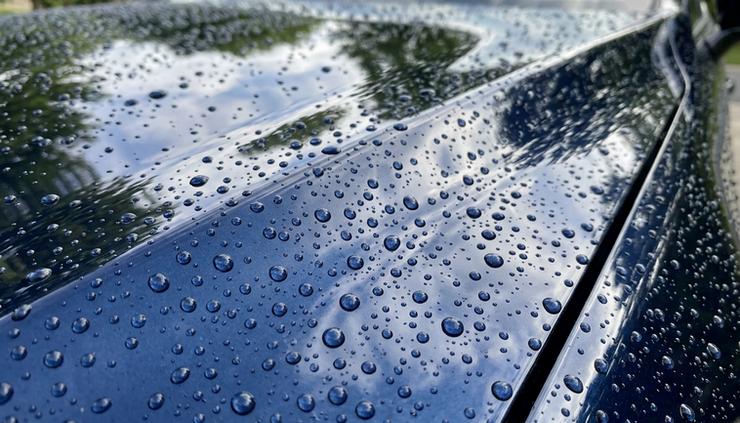
In this case study, Sedan B showed strong water beading at month 1, month 3, and month 6. The biggest difference appeared during washing. Dirt released faster, bug splatter softened more easily, and the drying towel moved across the surface with less drag.
The problem the owner wanted to solve
Both vehicle owners had the same complaint. The cars looked good for a few days after washing, then quickly became dull, dusty, or spotted. The owners wanted protection that made each wash feel less like starting over.
Paint problems before protection were easy to spot:
Water sat flat on the panels after rinsing
Bugs stuck to the front bumper
Bird droppings left faint marks when left too long
The roof and hood felt rough after washing
Drying took longer because water clung to the paint
The wax owner wanted a low-cost option and did not mind reapplying product every couple of months. The ceramic coating owner wanted longer intervals and less effort during routine washes.
That made the comparison fair. Neither product was judged as “best” in every category. Each was judged against its intended purpose.
The approach taken for each vehicle
Sedan A received wax by hand using a foam applicator. The wax was applied thinly, allowed to haze, then buffed off with clean microfiber towels. The owner repeated the process at month 3, month 6, and month 9.
Sedan B received one layer of ceramic coating. The coating was applied in small sections, leveled with a microfiber towel, then inspected for high spots. The vehicle stayed dry for the first 24 hours and was washed gently during the first week after curing.
The washing routine stayed consistent:
Rinse loose dirt first
Wash with clean mitts and pH-neutral shampoo
Use separate towels for wheels and paint
Dry with soft microfiber towels
Remove bugs and bird droppings as soon as possible
This routine helped both products last longer. A poor wash method could have damaged either finish. Wax would have stripped faster, and the ceramic coating would have collected swirl marks on top of the coated surface.
Results after three months
At the three-month mark, the difference became obvious.
Sedan A still looked glossy after being rewaxed, but the original wax layer had faded before the refresh. The car needed reapplication to restore strong water beading and slickness.
Sedan B still had its original coating. Water beading remained tight across the hood, roof, and trunk. The lower panels showed more grime after rain, but it washed away with less effort.
Category after 3 months | Waxed sedan | Ceramic coated sedan |
Water beading | Weak before reapplication, strong after new wax | Strong |
Washing effort | Normal | Easier |
Gloss | High after fresh wax | High and steady |
Reapplication needed | Yes | No |
Best visible result | Warm shine | Strong water behavior |
The wax looked excellent right after being refreshed. That was its strength. The ceramic coating looked more consistent between washes and did not need a fresh application.
Results after six months
At six months, the waxed car had been protected twice: once at the start and once around month 3. It was ready for another coat. The owner noticed the hood and roof lost beading fastest, which is typical because those areas take the most UV exposure and rain.
The ceramic coated car still performed well. Beading was not quite as dramatic as month 1, but the surface still shed water and dirt better than bare paint. The front bumper cleaned more easily than the waxed car, especially after bug-heavy highway drives.
The measurable maintenance difference showed up in wash time.
Sedan A usually took about 45 to 60 minutes to wash and dry carefully.
Sedan B usually took about 35 to 45 minutes under similar conditions.
Sedan A needed wax reapplication every 2 to 3 months.
Sedan B needed no coating reapplication during the first six months.
The time savings did not come from skipping steps. It came from less scrubbing, faster rinsing, and easier drying.

Results after twelve months
After 12 months, the waxed sedan still looked good because it received regular reapplication. The wax did its job, but only because the owner kept adding fresh protection. Without those repeat applications, the paint would have had long periods with little active protection.
The ceramic coated sedan still showed active protection, though not at peak strength. The water behavior was weaker than it had been at the start, especially on the hood. The side panels still cleaned easily, and drying remained faster than on unprotected paint.
At the one-year mark, the ceramic coating owner had two choices: use a compatible maintenance spray to boost the coating, or plan for a full decontamination and coating refresh later. The coating had not failed, but it was no longer brand new.
The wax owner also had a clear routine: wash, inspect, and apply wax every season or sooner.
Here is the practical takeaway from the 12-month comparison:
Factor | Wax | Ceramic coating |
Typical lifespan | 4 to 12 weeks | 1 to 5 years depending on product and care |
Best for | Regular shine and low-cost upkeep | Long-term protection and easier maintenance |
Application difficulty | Easy | Moderate to difficult |
Prep sensitivity | Medium | High |
Cost | Lower | Higher |
Scratch protection | Very limited | Limited, not scratch-proof |
Reapplication | Frequent | Infrequent |
Maintenance need | Regular waxing | Careful washing and occasional topper |
What each product really protects against
Both wax and ceramic coating protect paint by adding a sacrificial barrier. The difference is how strong that barrier is and how long it stays active.
Wax helps against light contamination. It can slow down how quickly dirt bonds to paint. It can also make rainwater bead and improve gloss. But wax breaks down quickly, especially in heat and frequent washing.
Ceramic coating offers stronger resistance to common paint enemies. It handles detergents, road film, UV exposure, and grime better than wax. It also makes cleaning easier because many contaminants have a harder time sticking to the surface.
Neither product fully protects against:
Rock chips
Deep scratches
Poor washing technique
Acidic bird droppings left too long
Water spots left to bake in the sun
Automatic brush wash damage
For impact protection, paint protection film is the stronger option. For gloss, water behavior, and cleaning ease, wax and ceramic coating serve different roles at different price points.
When wax makes more sense
Wax made sense in the case study for the owner who enjoyed maintaining the vehicle often. It gave fast results, required little equipment, and kept the car looking freshly detailed.
Wax is a good match when:
The car is washed often
The owner enjoys hands-on detailing
The budget is limited
The vehicle is garaged most of the time
Short-term shine matters more than long-term durability
Seasonal reapplication is acceptable
Wax also works well for special events, weekend cars, and owners who like changing products. If the goal is simple gloss and a satisfying afternoon detail, wax still has a place.
When ceramic coating makes more sense
Ceramic coating made sense for the owner who wanted longer protection and easier washing. The upfront work was higher, but the finish stayed more consistent across the year.
Ceramic coating is a good match when:
The vehicle is driven daily
The car sits outside often
Washing time needs to be reduced
Long-term protection matters
The owner wants fewer reapplications
Proper prep and curing are possible
The coating is only as good as the surface under it. If paint has swirls, oxidation, or water spots, the coating can lock in those defects visually. That is why polishing before coating often matters.

Lessons from the comparison
The case study showed that wax and ceramic coating are not direct equals. They solve related problems at different levels of strength and commitment.
Lesson 1
Wax is best treated as routine care. It looks great and protects lightly, but it needs regular renewal.
Lesson 2
Ceramic coating lasts longer because it bonds more strongly to paint. It still needs safe washing and timely contaminant removal.
Lesson 3
Prep controls the result. Clean, smooth, polished paint helps both wax and coating perform better.
Lesson 4
The best choice depends on maintenance habits. A waxed car cared for every few months can look excellent. A ceramic coated car washed poorly can still develop swirls.
The clear choice for most daily drivers
For a daily driver, ceramic coating offers the stronger long-term value if the paint is properly prepared and the owner follows a safe wash routine. It lasts longer, keeps the vehicle easier to clean, and reduces the need for frequent reapplication.
Wax still wins for simplicity, cost, and that fresh-detail glow. It is easy to apply, forgiving, and satisfying for owners who like maintaining their cars often.
The simplest way to decide is to match the product to the habit. Choose wax for short-term shine and regular hands-on care. Choose ceramic coating for longer protection, easier washing, and fewer repeat applications. Both have a purpose, but they do not last the same amount of time, and they should not be expected to perform the same job.



Comments