
How to Remove Water Spots from Your Vehicle Quickly and Safely

Water spots can make a clean vehicle look neglected, and if they sit too long, they can start to irritate or etch the clear coat. The good news is that most spots come off with the right process, light pressure, and a little patience.
The key is to start with the least aggressive method and work up only when needed. That protects the paint, glass, trim, and chrome while still getting the surface clean.

Know what kind of water spots you are dealing with
Not all spots are the same. Before scrubbing, look closely at the surface in good light.
Type of spot | What it looks like | Best starting method |
Fresh mineral spots | White or cloudy rings sitting on top of paint or glass | Car wash soap and microfiber towel |
Stubborn mineral deposits | Rough or chalky spots that remain after washing | Vinegar mix or water spot remover |
Etched spots | Marks that look dull, even after cleaning | Light polishing or professional correction |
If the spot feels raised, it is likely mineral buildup. If the surface feels smooth but still looks marked, the minerals may have lightly etched the clear coat.
Gather the right supplies
Use clean, paint-safe products. Dirty towels or harsh cleaners can turn a small water spot problem into scratches.
You will need:
pH-balanced car wash soap
Two buckets or a wash bucket with a grit guard
Clean microfiber wash mitt
Several plush microfiber towels
Distilled white vinegar
Distilled water
Spray bottle
Automotive water spot remover
Clay bar or synthetic clay mitt
Detail spray or clay lubricant
Polish and foam applicator, if spots are etched
Wax, sealant, or ceramic spray for protection
Avoid household glass cleaners on paint, abrasive kitchen pads, and strong acids unless they are made for automotive use.
1. Wash the vehicle thoroughly
Start by rinsing the vehicle from top to bottom. This removes loose dirt that could scratch the paint during contact washing.
Wash with car soap using gentle, straight-line motions. Rinse the wash mitt often. Work in sections so soap does not dry on the surface.
After washing, dry the vehicle with a clean microfiber drying towel. Do not let it air dry, since that can create new mineral spots.
Work in shade whenever possible. Heat makes water and cleaners dry too quickly, which can make the problem worse.
2. Inspect the spots after washing
Once the vehicle is clean and dry, check whether the spots are still visible. Washing removes dirt and some light mineral residue, but it may not remove bonded deposits.
Run your fingertips lightly over the area inside a thin plastic sandwich bag. If the paint feels gritty or bumpy, minerals or other contaminants are still on the surface.
Check these common areas closely:
Hood and roof
Side mirrors
Lower doors
Glass near the edges
Chrome trim
Black plastic trim
The roof and hood often show the worst spotting because water sits and dries there under direct sun.
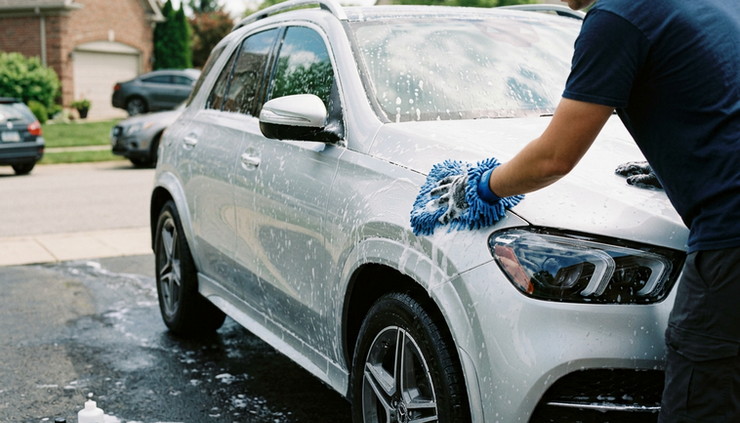
3. Use a vinegar solution on mineral deposits
For many mild to moderate water spots, a simple vinegar mix works well. Vinegar helps dissolve mineral deposits without heavy scrubbing.
Mix equal parts distilled white vinegar and distilled water in a spray bottle. Spray a small section, let it sit for about one minute, then wipe gently with a microfiber towel. Do not let the solution dry on the paint.
Rinse the area with clean water and dry it. If the spot improves but does not disappear, repeat once.
Use extra care on:
Uncoated aluminum trim
Matte finishes
Old or failing paint
Aftermarket wraps
Black plastic trim
If unsure, test the solution on a small hidden area first.
4. Apply an automotive water spot remover
If vinegar does not work, use a dedicated automotive water spot remover. These products are made to break down mineral deposits on vehicle surfaces, but instructions vary by product.
Apply it according to the label. Most are used on a cool, clean surface and wiped off quickly. Use light pressure and a clean microfiber towel.
Do not treat the whole vehicle at once. Work one small area at a time, then inspect the result. This keeps the cleaner from drying and gives better control.
For glass, use a cleaner labeled safe for automotive glass. For paint, use a product labeled safe for clear coat.
5. Clay the surface if it still feels rough
If the paint looks better but still feels gritty, clay can remove bonded contaminants left behind after cleaning.
Spray clay lubricant on the surface, then glide the clay bar or synthetic clay mitt over the paint with light pressure. The clay should move smoothly. If it drags, add more lubricant.
Fold traditional clay often to expose a clean side. If it falls on the ground, throw it away. Grit stuck in clay can scratch paint.
After claying, wipe the area dry and inspect the finish.

6. Polish lightly if the spots have etched the paint
If the surface feels smooth but the marks remain, the spots may be etched into the clear coat. Cleaning products will not fully remove etching because the surface itself has been affected.
Try a light finishing polish by hand on a small test area. Use a foam applicator and gentle circular or crosshatch motions. Wipe off residue with microfiber and inspect under good light.
If the spot fades, continue carefully. If nothing changes, stop. Deep etching may need machine polishing by someone with experience.
Do not keep rubbing harder. More pressure can create haze, swirls, or uneven gloss.
7. Protect the surface after the spots are gone
Once the finish is clean, add protection. Wax, paint sealant, or ceramic spray helps water bead and makes future minerals easier to remove.
Apply the product to clean, dry paint following the label directions. Buff with a clean microfiber towel.
Protection will not stop water spots forever, but it gives you more time to dry the vehicle before minerals bond to the surface.
Prevent water spots from coming back
The fastest fix is prevention. Small habits make a big difference.
Dry the vehicle after washing or rain when possible.
Use filtered or softened water for washing if your tap water is hard.
Wash in the shade or early in the day.
Avoid parking near sprinklers.
Keep a quick detail spray and microfiber towel in the garage.
Refresh protection every few months, based on the product used.
Glass can also benefit from a water-repellent treatment. It helps water roll off and makes mineral deposits less stubborn.
What a good result looks like
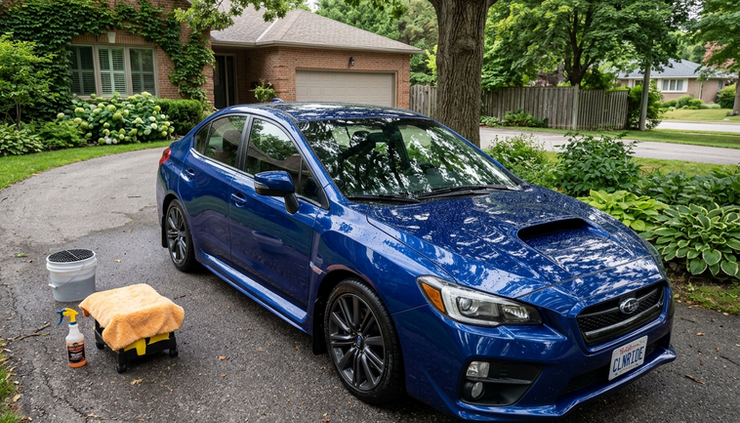
After a proper water spot removal process, the paint should feel smooth, look clear in direct light, and dry without cloudy rings. Glass should wipe clean without chalky edges or dull patches.
Start with washing, then move to vinegar, water spot remover, clay, and polish only if needed. That order keeps the job quick while protecting the finish. The safest way to remove water spots from your vehicle is to use the mildest method that works, then seal the clean surface before the next round of hard water dries on it.



Comments