
How Sea Conditions Damage Boats and What to Watch For

Salt water is only the obvious culprit. Boats also take damage from heat, sunlight, dissolved minerals, suspended sand, marine growth, wave pressure, and the wet-dry cycles that happen every time spray lands and evaporates.
Around Oahu, those conditions stack up fast. A boat can look clean after a rinse, then show cloudy gelcoat, rust stains, chalky metal, stiff vinyl, or a rough waterline a few weeks later. For boat detailing, the key is knowing which sea conditions cause which marks, so the cleaning plan does not miss hidden damage.

Salt makes water more conductive
Salt is the main reason seawater is hard on boats. It breaks down into charged ions, which help electricity move through water. That makes seawater a strong electrolyte. When different metals sit near each other in that environment, corrosion speeds up.
Common trouble spots include:
Stainless fittings that develop tea-colored stains
Aluminum T-tops and rails with white oxidation
Fasteners around hinges, cleats, and ladders
Outboard brackets, trim tabs, and lower units
Battery terminals and electrical connections exposed to spray
Salt also creeps into seams, snaps, zippers, rub rails, and non-skid texture. Once it dries, it leaves crystals behind. Those crystals attract moisture from the air and keep surfaces damp longer than they should be.
That is why a quick freshwater rinse helps, but it does not always finish the job. Detailers often find salt packed under cushions, around hatch gutters, and inside hardware edges long after the deck looks clean.
What to watch for: orange streaks below stainless, chalking on aluminum, green staining around electrical parts, and rough white buildup near hardware.
Sunlight and heat break down finishes
The sea does not damage a boat only from below. In places like Honolulu and Pearl Harbor, intense UV exposure and warm surface temperatures work on the topsides every day.
UV rays attack gelcoat, paint, vinyl, rubber, acrylic panels, and clear plastics. Heat speeds up that process. A dark canvas cover, black rub rail, or tinted acrylic windshield can get much hotter than the air around it.
The result often shows up as:
Gelcoat oxidation that looks dull, powdery, or cloudy
Vinyl that feels dry, sticky, or brittle
Clear vinyl windows that yellow or haze
Rubber trim that cracks
Faded canvas and stitching
Salt makes UV damage worse because salt film leaves a fine residue that scatters light and traps grime. On white gelcoat, this can look like a dull gray cast. On darker hulls, it often shows as uneven fading or water spots baked into the finish.
Waves, wakes, and pressure stress the structure
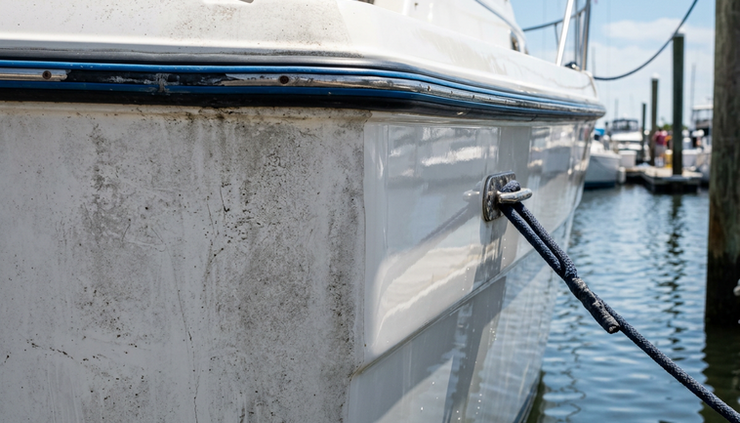
Moving water can wear down more than the hull bottom. Repeated chop, wakes, and surge put stress on fittings, seams, and coatings. Even when a boat stays tied up, wave motion can pull against dock lines and fenders for hours.
This type of damage is often mechanical, not chemical. Water forces grit against surfaces. Fenders rub the same spot. Mooring lines grind salt and sand into gelcoat. Spray hits canvas and clears, then dries in the sun.
Look closely at:
Rub rail scuffs
Fender marks on topsides
Hairline cracks around cleats
Wear around swim platforms
Chafed canvas points
Loose snaps or pulled stitching
Boat detailing cannot repair every stress crack, but it can reveal them early. Cleaning away salt, wax buildup, and grime makes it easier to see whether a mark is only surface transfer or a sign of deeper movement.
What to watch for: repeating marks at the same height, circular fender haze, spider cracks near hardware, and dull patches where lines or covers rub.
Sand, silt, and minerals act like abrasives
Seawater carries tiny particles. Near shore, harbors, ramps, sandbars, and shallow channels, that can include sand, coral dust, silt, and other mineral grit. These particles settle into carpets, non-skid, drains, bilges, trailers, and hull contours.
On a boat’s finish, grit acts like very fine sandpaper. Scrubbing without proper rinsing can drag particles across gelcoat or clear coat. That creates swirl marks and fine scratches, especially on dark hulls.
Minerals also leave deposits when water evaporates. These spots can bond tightly to glass, brightwork, outboards, and painted surfaces. In sunny, windy conditions, spray can dry before it has time to run off.
A safe detailing routine starts with a thorough rinse and controlled wash. Let the water carry loose grit away before brushes, mitts, or pads touch the surface.

Marine growth grips submerged surfaces
Warm seawater supports algae, barnacles, slime, and other growth. Any surface that stays wet long enough can become a home for it. Hull bottoms, transducers, trim tabs, outboards, ladders, and through-hulls all need extra attention.
Marine growth causes drag, but it also traps moisture and shields corrosive activity underneath. Barnacles can leave hard rings and adhesive scars after removal. Slime can stain waterlines and make anti-fouling coatings look older than they are.
Waterline staining is especially common because it sits at the meeting point of sunlight, oxygen, salt, and organic matter. That zone sees constant wetting and drying.
What to watch for: brown or yellow waterline stains, green film near shaded areas, barnacle bases on metal, and rough patches that remain after washing.
Humidity and salt air keep damage active
A boat does not have to be in the water to suffer sea damage. Salt air carries fine mist inland, especially with trade winds and on roads close to the coast. Boats stored near Pearl City, Honolulu, and other Oahu marine areas can collect salt even on trailers.
Humidity keeps that salt active. Dust and pollen stick to it, then grime builds into a film. Under covers, trapped moisture can lead to mildew on vinyl, canvas, compartments, and life jacket storage.
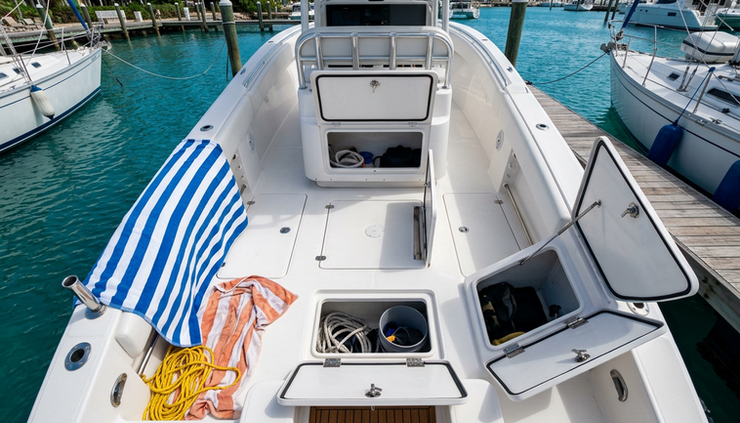
Inside the boat, check:
Hatch seals
Upholstery seams
Under-seat storage
Bilge corners
Carpet backing
Canvas folds
Wiring tucked behind panels
A dry boat is easier to protect. Airflow matters as much as washing. After cleaning, open compartments and let trapped moisture escape when conditions allow.
A practical inspection routine after saltwater use
The best way to catch sea damage is to inspect the same zones every time. A simple pattern prevents missed areas.
After a saltwater run, check:
Start at the bow
Look for anchor locker salt, rust from chain, and grime in hatch gutters.
Move down the rails and hardware
Inspect stainless, aluminum, snaps, hinges, and fasteners for early staining.
Check glass and clear plastics
Watch for hard water spots, salt haze, and cloudy vinyl.
Inspect the waterline
Look for yellowing, algae film, scum rings, and rubbed fender marks.
Look at the stern and motor area
Salt collects around brackets, swim ladders, trim tabs, and outboard crevices.
Open storage and bilge areas
Smell for mildew, feel for dampness, and look for salt crust.
The main sea properties that damage boats are salt, dissolved oxygen, sunlight, heat, suspended grit, minerals, biological growth, humidity, and water movement. Each leaves a different clue. Corrosion, oxidation, staining, scratching, mildew, and marine growth all start small before they become expensive.
A clean boat is not always a protected boat. The best results come from rinsing thoroughly, washing with the right products, drying hidden areas, protecting gelcoat and metal, and checking the same high-risk spots after each outing. That habit turns sea damage from a surprise into something you can see, manage, and slow down.



Comments