
How Purified Water Saves Paint Costs and Improves Paint Quality

One dirty rinse can ruin an otherwise perfect paint job. Minerals, chlorine, iron, sediment, and soap left behind by regular tap water can show up later as fisheyes, pinholes, dull spots, stains, or poor adhesion. That means sanding, repainting, more labor, more materials, and more time lost.
Purified water helps stop those problems before they start. Whether it comes from a reverse osmosis system, deionized water setup, or another controlled filtration process, clean water protects the surface before paint ever touches it. For busy paint shops, detailers, body shops, cabinet finishers, and industrial painters, that can add up to thousands of dollars saved over time.

Tap water can carry more than water
Water from a household line or hose may look clear, but clear does not always mean clean. Municipal and well water can contain dissolved minerals, chlorine, rust, calcium, magnesium, salts, or sediment. A garden hose can also add contaminants of its own, especially if it sits in the sun or has old fittings.
Those small contaminants matter because paint work depends on a clean, stable surface. When hard water dries, it can leave mineral spots. When residue stays on the panel, coating may not flow evenly. When salts or minerals remain under paint, they can interfere with adhesion or show up as defects after curing.
Common issues linked to poor water quality include:
Water spotting after washing or rinsing
Fisheyes from residue or surface contamination
Streaks under clearcoat or topcoat
Poor adhesion on edges, seams, and repaired areas
Extra sanding and buffing after curing
Rework caused by contamination that was hard to see at first
The expensive part is not the water itself. The expensive part is what bad water can cause.
Purified water reduces costly rework
Rework is where paint costs climb fast. A repaint does not just use more paint. It also uses more primer, sealer, clearcoat, masking supplies, sandpaper, solvents, towels, booth time, electricity, and labor.
If a shop has to redo a hood, door, cabinet run, or equipment panel because of contamination, the cost can be far higher than the price of purified water. One failed job may take hours to correct. Several failed jobs over a year can easily reach thousands of dollars in wasted time and materials.
Purified water saves money by lowering the chance of failure. It gives the painter better control over the prep process. It also makes results more repeatable. That matters when every job needs to match the last one.
For example, a shop using tap water for final rinses may see hard water spots after panels dry. The team then has to wipe, inspect, sand, or polish before moving forward. With purified water, the final rinse dries cleaner, so the painter spends less time chasing residue.

Better water supports better paint quality
Paint quality depends on clean prep, correct products, and controlled conditions. Water quality plays a part in all three.
It improves surface preparation
Before painting, surfaces often need washing, rinsing, wet sanding, or wipe-down steps. If that water leaves minerals behind, the surface may not be as clean as it appears.
Purified water helps remove dirt, dust, sanding residue, and cleaning products without adding new residue. That makes the next step more reliable, whether the job is automotive refinishing, equipment painting, marine coating, or cabinet finishing.
It helps waterborne systems perform as intended
Many modern coatings are waterborne or water-reducible, especially in automotive and industrial work. These systems are sensitive to contamination. Painters should always follow the paint manufacturer’s technical sheet and use approved reducers or additives.
When water is allowed for cleanup, dilution, or process use, purified water is safer than hose water because it has fewer unknowns. That means fewer surprises in flow, leveling, drying, and final appearance.
It protects gloss and clarity
Clearcoat and topcoat quality can suffer when contamination gets trapped underneath. Even tiny mineral residue can affect how light reflects from the surface. The finish may look hazy, uneven, or less glossy than expected.
Cleaner water helps create a cleaner base. A cleaner base supports better gloss, better color consistency, and fewer defects that require buffing later.
Where purified water makes the biggest difference
Purified water does not need to replace every gallon used in a shop. The biggest savings often come from using it in the steps that affect the final finish most.
Use purified water for:
Final rinse before drying
Wet sanding on high-value finishes
Mixing only when the product instructions allow it
Cleaning spray equipment used with waterborne coatings
Wiping panels before final inspection
Rinsing parts with complex shapes, seams, or edges
Regular water may still be fine for rough cleaning, floor washing, or early-stage dirt removal. The key is to switch to purified water before the surface becomes paint-ready.
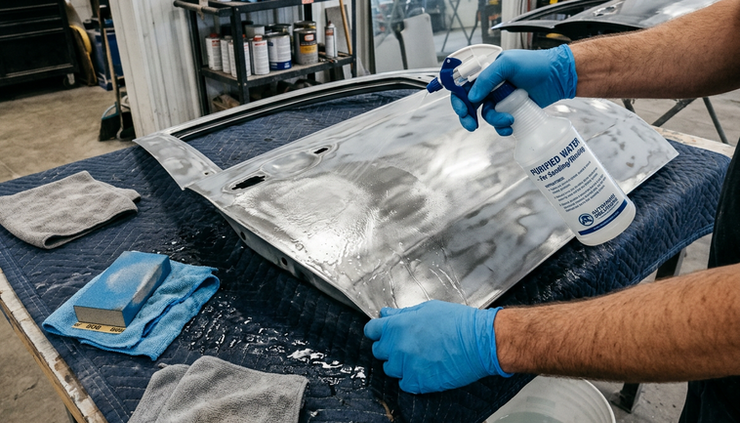
What counts as purified water for paint work
Not all filtered water is the same. A simple carbon filter can reduce taste and odor, but it may not remove dissolved minerals. For paint work, the most useful options are usually:
Water type | What it helps remove | Common use |
Reverse osmosis water | Many dissolved minerals and impurities | Final rinsing, general prep |
Deionized water | Charged minerals and salts | Spot-free rinsing, high-quality prep |
Distilled water | Minerals left behind by boiling and condensing | Small batch use, controlled applications |
A total dissolved solids meter, often called a TDS meter, can help track water quality. It does not identify every contaminant, but it gives a quick reading of dissolved solids. If readings rise, the filter or resin may need service.
The goal is simple: use water with fewer unknowns during the steps that affect finish quality.
Small process changes can protect large jobs
Purified water works best when it becomes part of a clean process. Store it in sealed containers. Use clean spray bottles. Keep towels separate from oily or silicone-contaminated products. Do not run clean water through a dirty hose and expect clean results.
A few practical habits make a big difference:
Label purified water containers clearly
Replace filters or resin on schedule
Test water quality regularly
Use fresh microfiber towels for final wipe-downs
Keep purified water away from dirty wash buckets
Train staff on when hose water is no longer acceptable
These steps cost far less than repainting a job because of preventable contamination.

The real savings come from consistency
Paint costs are not only about the price of paint. They include labor, materials, booth time, customer delays, and the reputation attached to the finished job. Purified water helps protect all of those.
When the rinse water is clean, the surface is more predictable. When the surface is predictable, the coating has a better chance to lay down smoothly. When fewer jobs come back for defects, the shop saves money and produces better work.
The takeaway is simple: do not let cheap water create expensive paint problems. Use purified water where finish quality matters most, especially during final prep, rinsing, wet sanding, and approved waterborne coating processes. A cleaner surface gives paint the best possible start, and that is where high-quality finishes begin.



Comments